
Speeding in Washington, D.C. has become more than just a traffic issue — it’s a serious public safety concern. Drivers going 20 to 30 mph over the limit are involved in countless crashes, putting lives at risk every day. In response, the DC Department of Motor Vehicles (DC DMV) has launched a new program to stop aggressive speeding using built-in vehicle technology.
The initiative, called Intelligent Speed Assistance (ISA), relies on smart systems like GPS, digital speed-limit maps, and forward-facing cameras to track how fast a vehicle is going. When a driver exceeds the legal limit, ISA can either issue a warning or automatically restrict the car’s speed. This technology aims to take the choice out of speeding — especially in areas where it can do the most harm.
Similar speed control systems in the USA are being tested and rolled out to address reckless driving. For example, GPS-based vehicle limiters for U.S. roads are already proving to be effective in real-world use, helping reduce high-speed crashes across cities and highways.
What Is Intelligent Speed Assistance (ISA)?

Intelligent Speed Assistance, or ISA, is a vehicle safety system designed to keep cars from speeding. It does this by using smart tools inside the car, like GPS, digital speed limit maps, and road sign cameras, to know how fast you should be going at any given moment. If you try to go over the limit, the car will either warn you or actively slow you down.
But ISA is not one-size-fits-all. There are different versions, and not all of them work the same way.
Active vs. Passive ISA Systems
There are two main types of ISA systems: passive and active.
- Passive ISA simply alerts the driver when they’re speeding. It might beep, flash a light, or vibrate the steering wheel. The driver still has full control and can choose to ignore the warning.
- Active ISA goes a step further. If you don’t respond to the warning, the system takes action. It limits the car’s speed by controlling how much power goes to the engine. This means the car physically can’t go faster than the posted limit, even if you press the gas pedal harder.
This difference is important. Passive ISA is more about awareness, while active ISA is about enforcement. Both aim to reduce speeding, but active systems are far more effective at preventing dangerous behavior.
Different Types of ISA: Advisory, Voluntary, and Mandatory
ISA systems can also be grouped by how much freedom they give the driver:
- Advisory ISA – Gives you a warning, but it’s completely up to you whether you slow down.
- Voluntary ISA – The system limits your speed, but you can override it if needed.
- Mandatory ISA – You can’t turn it off or override it. Once you hit the limit, the car won’t let you go faster.
The DC DMV’s program is leaning toward voluntary systems for now, but other countries, like those in the European Union, are already moving toward mandatory ISA in all new cars.
How ISA Controls Vehicle Speed
When ISA steps in to control your speed, it doesn’t slam the brakes. Instead, it uses engine power management to slow you down in a smooth way.
Here’s how:
- It talks directly to the Electronic Control Unit (ECU) — the car’s onboard computer that manages engine functions.
- It adjusts the throttle, which controls how much fuel the engine gets. Less fuel means less power, which means lower speed.
- Some advanced systems may work alongside adaptive cruise control or automatic braking to manage speed and distance safely.
The key point is: ISA is designed to be subtle, safe, and automatic. You may not even feel it kick in — but you’ll notice you’re no longer speeding.
How ISA Fits into Advanced Driver Assistance Systems (ADAS)
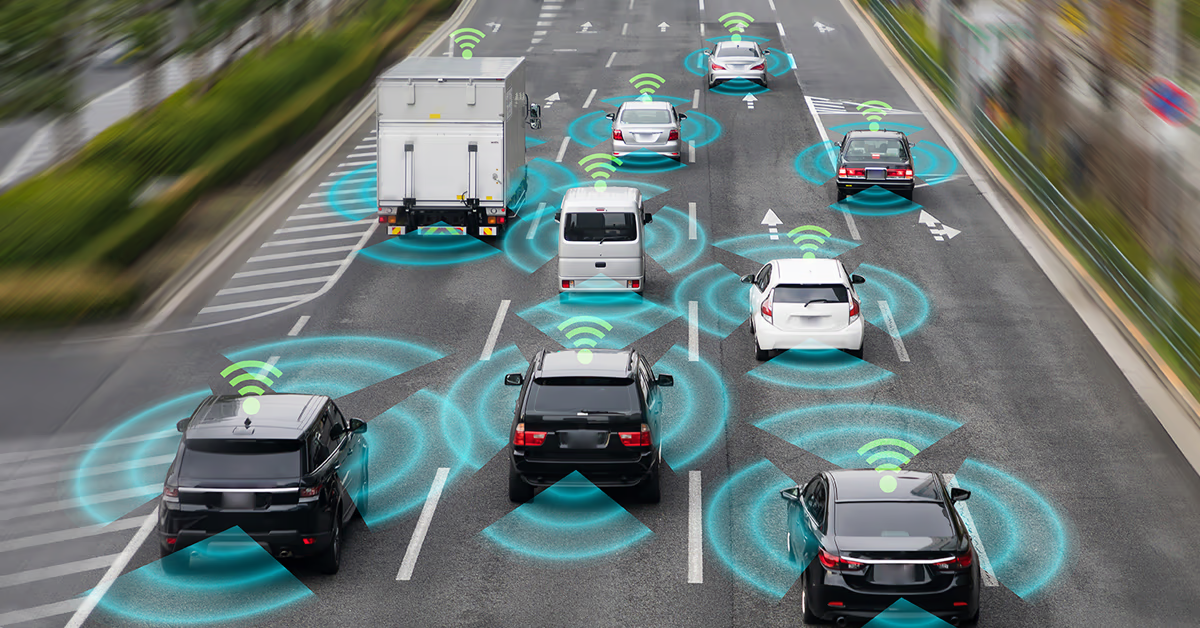
ISA is just one part of a bigger group of car technologies called Advanced Driver Assistance Systems (ADAS). These include things like:
- Lane-keeping assist
- Blind-spot monitoring
- Automatic emergency braking
- Adaptive cruise control
All of these systems work together to reduce human error and make driving safer. ISA specifically targets speed control, which is a huge factor in crash risk and injury severity.
In fact, ISA has already been tested and rated by Euro NCAP, the European New Car Assessment Programme. This independent safety group includes ISA in its vehicle safety ratings, just like it does for airbags and crash tests. Cars with ISA get higher safety scores — which makes it more attractive to buyers and regulators alike.
Why DC Is Using ISA
D.C. has a real problem with aggravated reckless driving. The numbers don’t lie — too many drivers are speeding way beyond what’s safe. According to DC DMV:
- Driving 30+ mph over the limit is a serious offense.
- Driving 20+ mph over the limit can also be classified as aggravated reckless driving if it leads to:
- Injuring someone
- Crashing into another vehicle
- Causing $1,000+ in property damage
These aren’t rare cases. You see them in the news all the time. That’s why DC is using ISA to target those who pose the highest risk to others on the road.
This program follows the success of another DMV safety effort — the Ignition Interlock Device (IID) program, which prevents people from starting their car if they’ve been drinking. Just like IID helps stop drunk driving, ISA is here to stop dangerous speeding.
How the ISA Program Works
The District of Columbia’s Intelligent Speed Assistance (ISA) program isn’t just a concept — it’s now active and being rolled out as a pilot initiative. This section explains not only how ISA functions in real driving situations but also how it’s being implemented by the DC Department of Motor Vehicles (DC DMV).
Let’s take a deeper look at the key parts of the program:
Installation: Factory-Fitted or Retrofitted?
Right now, most vehicles in the ISA pilot are retrofitted with the technology. That means the system is added after the car is already built, not during manufacturing. These kits typically include:
- A GPS receiver
- A digital map system with speed limit data
- A forward-facing camera for reading road signs
- A connection to the vehicle’s throttle system or ECU (Engine Control Unit)
Retrofitting ensures that even older or non-luxury vehicles can join the program. However, as vehicle manufacturers increasingly adopt ISA into their design standards — especially in Europe — we’re likely to see factory-installed ISA become more common in U.S. vehicles as well.
Car brands like Volvo, Ford, and BMW have already tested or included ISA features in some European models, and they’re watching U.S. regulatory changes closely.
Is ISA Mandatory in D.C.?
As of now, ISA in Washington, D.C. is voluntary — but with targeted enrollment. The DMV is focusing on:
- Repeat traffic offenders
- High-risk drivers
- Participants in safety-focused programs
Drivers who join the pilot agree to have their vehicle equipped with ISA, often as part of an alternative to heavier penalties or as a condition of regaining driving privileges.
There is no current mandate for all drivers to use ISA in D.C., but this could change if the program shows strong results. In Europe, for example, ISA became mandatory for all new cars sold after July 2022.
How ISA Responds to Temporary Speed Zones

One of the most critical features of a smart ISA system is how it handles dynamic or temporary speed limits, like:
- Construction zones
- School zones
- Event-based traffic zones
- Weather-affected speed changes
In D.C.’s program, the ISA tech relies on real-time data from GPS and map updates, but it also uses camera-based sign recognition to catch any temporary changes.
Let’s say you’re driving near a school and the flashing lights go on — the ISA system’s camera will read the reduced speed limit and immediately apply the new rule. If you don’t slow down, the system can gently reduce the throttle, preventing you from exceeding the posted limit.
This is a big deal. One of the main complaints about older GPS-based speed systems was their inability to adjust quickly. But by combining sign-reading with live data, the D.C. ISA pilot is tackling this problem directly.
Which Vehicles and Manufacturers Are Involved?
As of now, the DC DMV hasn’t named specific manufacturers officially partnering in the pilot, but the vehicles in the program are being fitted with universal ISA hardware and software, compatible with most modern cars.
That said, automakers are watching closely. Many already offer speed assist systems in their driver assistance packages. For example:
- Mercedes-Benz includes Speed Limit Assist in its ADAS bundle.
- Toyota offers Road Sign Assist in several models.
- Tesla’s Autopilot reads speed signs but does not yet actively limit speed — an ISA-style feature is expected in future updates.
As the U.S. federal government moves toward standardized vehicle safety technology, manufacturers will likely align their systems with government ISA requirements — much like they did with airbags or backup cameras in the past.
DC DMV’s Strategy and Rollout Plan
The D.C. DMV has been smart about this rollout. Instead of making ISA a sweeping regulation, it’s starting with a controlled pilot. This allows:
- Data collection to see how ISA affects driving habits
- Testing in real-world traffic, including busy corridors, school zones, and highways
- Feedback from drivers, mechanics, and safety experts
The goal is to understand not just whether ISA works, but how it works best in a mixed traffic environment. The program builds on lessons learned from the successful Ignition Interlock Device (IID) program, which showed that tech-based interventions can change dangerous habits.
In time, if ISA proves effective in reducing speeding, injuries, and fatalities, the DMV could push for wider adoption or even mandatory use for high-risk driver groups.
The Benefits of ISA
The Intelligent Speed Assistance (ISA) system offers more than just a way to control how fast your car goes. It’s a powerful tool that brings real-world benefits to drivers, pedestrians, city planners, and even insurance companies. Whether you’re behind the wheel or walking on the sidewalk, ISA is designed to create a safer, smarter traffic environment.
Let’s explore why ISA matters — and how it could reshape driving behavior in D.C. and beyond.
1. Reduces Fatal Crashes and Serious Injuries
Speeding is one of the leading causes of traffic deaths and life-altering injuries. According to the National Highway Traffic Safety Administration (NHTSA), speed contributes to nearly one-third of all traffic fatalities in the U.S. each year.
By making it physically harder for a driver to exceed the posted speed limit, ISA directly removes one of the riskiest behaviors from the equation. Less speeding means:
- Shorter stopping distances
- Less impact force during collisions
- More time to react to obstacles, people, or road changes
In cities like London and Oslo, where ISA trials have taken place, authorities saw a significant reduction in both speed-related crashes and pedestrian deaths. That’s not just a stat — it’s someone’s family member being protected.
2. Protects Vulnerable Road Users
Not everyone on the road is inside a car. Pedestrians, cyclists, delivery workers, scooter riders, and wheelchair users are often the first to be harmed when drivers go too fast — especially in busy city neighborhoods, near schools, or at intersections without signals.
ISA helps by:
- Forcing drivers to obey lower speed limits in school zones and residential areas
- Making driver behavior more predictable, which gives vulnerable road users time to respond
- Reducing the severity of impact if a crash does occur
At 40 mph, the chance of killing a pedestrian is around 85%. At 20 mph, that risk drops to 5%. ISA could be the difference between a close call and a catastrophe.
3. Encourages Safer Driving Habits
Even responsible drivers sometimes speed without noticing — maybe they missed a sign, are in a hurry, or simply got distracted. ISA acts as a digital co-pilot that keeps you in check.
Over time, drivers who use ISA begin to:
- Stay more mindful of their speed
- Become more attuned to local speed zones
- Drive with less stress, knowing the system is backing them up
This shift in behavior promotes long-term road discipline, especially for younger drivers or those returning to driving after violations. It’s a habit builder, not just a speed cap.
4. Supports D.C.’s Vision Zero Strategy
Washington, D.C. has committed to Vision Zero — a bold plan to eliminate all traffic deaths and serious injuries. ISA is a critical tool in helping reach that goal. Unlike signs or enforcement alone, ISA brings the enforcement into the vehicle itself.
ISA supports Vision Zero by:
- Targeting the root cause (speeding) instead of just the outcome
- Making safer driving a default behavior, not just a personal choice
- Aligning with other smart-city efforts like traffic calming, protected bike lanes, and pedestrian-first design
It also offers data insights to city planners, helping them understand where drivers tend to speed and where better road design might help.
Who Should Care — And Why It Matters

Drivers, parents, city planners — anyone who uses the road should care. Whether you’re behind the wheel or crossing the street, your safety depends on others following the law. ISA helps take human error (and ego) out of the equation.
And if you’re a new driver or helping someone learn to drive, this is even more important. The DC DMV has a great guide for learner permits, which helps young drivers get started with safer habits right from the beginning.
Possible Challenges and Pushback
Of course, not everyone’s thrilled.
Some drivers worry about losing control of their own car. Others are concerned about privacy — will GPS be used to track your every move? And what about situations when speeding is needed, like emergencies?
These are valid concerns. Right now, ISA can often be overridden by the driver. The key is balance — using tech to help, not control. But the truth is, most speeding isn’t an emergency — it’s a choice. And too often, it’s the wrong one.
What This Means for the Future of Driving
ISA isn’t just a local trend — it’s part of a bigger shift. Around the world, more cities and countries are exploring automated safety tech in cars. In the future, ISA could become mandatory in new vehicles, just like seat belts or airbags.
That means we’re heading toward a world where your car doesn’t just take you places — it keeps you and everyone else safe while doing it.
Final Thoughts
The roads in DC — and across the country — are getting smarter. Programs like ISA are a sign of what’s coming: technology that helps us become better, safer drivers. It might feel like a big change, but it’s a step in the right direction.
At the end of the day, it’s not about the machine. It’s about protecting people, reducing harm, and giving everyone a better shot at getting home safely.
If that means your car helps you slow down a bit, maybe that’s not such a bad thing.