
Keeping our roads safe has always been a top priority. With more cars, buses, and delivery vans on the move every day, speeding is still one of the biggest dangers on American roads. But thanks to modern technology, we now have tools like Speed Limiters and Intelligent Speed Assistance (ISA) that can help drivers stay within safe limits.
While both sound similar, they work in very different ways. Let’s break it down and understand how each technology works, where they’re used, and which one fits better for the roads in the United States.
What is a Speed Limiter?
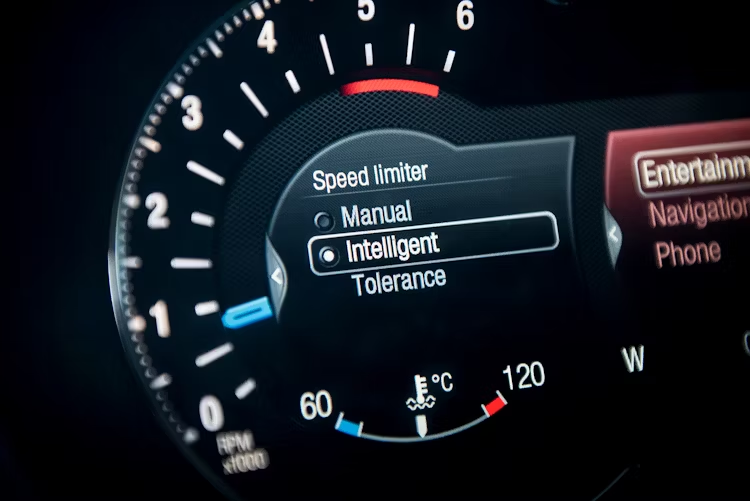
A speed limiter, also known as a speed governor, is a specialized electronic or mechanical device that prevents a vehicle from exceeding a set speed. Think of it like a virtual barrier — no matter how hard the driver steps on the accelerator, the vehicle will not go past the programmed speed limit.
In many ways, it’s like cruise control’s stricter cousin — but instead of maintaining a constant speed, the limiter simply prevents the vehicle from crossing a maximum threshold.
How Speed Limiters Work
Most modern speed limiters are controlled by the Engine Control Unit (ECU) — the brain of your vehicle. The ECU uses sensors to measure real-time speed and then regulates engine power or fuel injection to prevent speeding.
Here’s how the process works:
-
The driver presses the accelerator.
-
The ECU constantly checks the vehicle’s speed.
-
Once the speed hits the maximum limit (say, 65 mph), the limiter intervenes.
-
It sends a signal to reduce fuel flow or limit throttle response.
-
The vehicle maintains that maximum speed unless the limiter is disabled or adjusted.
Some vehicles also use CAN bus systems (Controller Area Network) to communicate between the limiter and other control modules — such as the transmission, brake systems, and GPS modules — ensuring smooth and safe operation.
Types of Speed Limiters
Speed limiters aren’t one-size-fits-all. Different vehicles and use cases call for different solutions. Here are the main types:
1. Single-Speed Limiter
This is the most basic type. It restricts the vehicle to one top speed, which is fixed during setup. For example:
-
A delivery van might be limited to 55 mph to improve fuel efficiency.
-
A city bus might be capped at 45 mph for safety in crowded urban zones.
2. Dual-Speed / Multi-Speed Limiter
These are more advanced. They allow you to set multiple speed limits depending on:
-
Road type (e.g., city vs. highway)
-
Vehicle location (via GPS geofencing)
-
Time of day (e.g., slower speeds during school hours)
This is ideal for school buses or terrain-based fleet operations, where drivers need to adapt to varying speed policies without manually changing settings.
3. GPS-Integrated Speed Limiters
With GPS-based systems, the speed limiter adjusts based on the vehicle’s exact location. For instance:
-
Entering a residential area? The limiter automatically drops to 25 mph.
-
Back on the highway? It raises to 65 mph.
These smart systems help eliminate human error and ensure regulatory compliance, especially in countries or regions with variable speed zones.
Companies like Resolute Dynamics have engineered advanced limiters that combine precision engineering, terrain recognition, and custom speed profiles, which are particularly useful for modern fleet safety strategies.
Where Are Speed Limiters Used?
Speed limiters are increasingly found in:
-
Commercial Fleets: Trucking companies use them to reduce speeding tickets, fuel costs, and accident risks.
-
School Transportation: Limiters help ensure children’s safety by enforcing strict limits in and around school zones.
-
Public Buses & Transit Systems: Urban buses use them to avoid high-speed driving in populated areas.
-
Rental Vehicles & Driver Training: New drivers and high-risk vehicle categories benefit from controlled environments.
In many parts of the world — such as Europe, the Middle East, and Africa — speed limiters are mandatory by law for certain vehicle classes. In the U.S., they are not federally mandated yet, but many private fleet operators choose to install them voluntarily due to insurance savings and public safety responsibilities.
Benefits of Using Speed Limiters
Let’s look at why speed limiters are gaining popularity across industries:
| Benefit | Description |
|---|---|
| Improved Road Safety | Reduces high-speed collisions, which are often more severe and fatal. |
| Lower Fuel Consumption | Driving at controlled speeds can improve fuel efficiency by up to 20%. |
| Reduced Maintenance Costs | Less engine strain means fewer repairs and longer vehicle lifespan. |
| Regulatory Compliance | Helps fleets meet safety standards and avoid penalties in certain jurisdictions. |
| Driver Behavior Management | Discourages reckless driving and supports safer habits. |
Is It Legal to Use Speed Limiters in the U.S.?
Yes, absolutely. In fact, the Federal Motor Carrier Safety Administration (FMCSA) has proposed rules recommending mandatory speed limiters on certain commercial vehicles weighing over 26,000 pounds. While not yet a law, it’s a strong signal toward future legislation.
Some insurance companies even offer discounts for fleets equipped with certified limiter systems. Additionally, state and local regulations may enforce speed caps for school transportation providers.
Not Just a Gadget — A Strategic Safety Tool
A speed limiter isn’t just a device. It’s a vehicle safety solution that improves operations, reduces liability, and saves lives. When paired with other technologies — like GPS tracking, driver fatigue monitors, or real-time telematics — it becomes a critical part of a smart mobility ecosystem.
For companies that operate large or mixed fleets, the combination of dual-speed limiters and GPS data integration allows them to create automated safety zones, optimize routing, and enforce compliance — without adding complexity for drivers.
What is Intelligent Speed Assistance (ISA)?
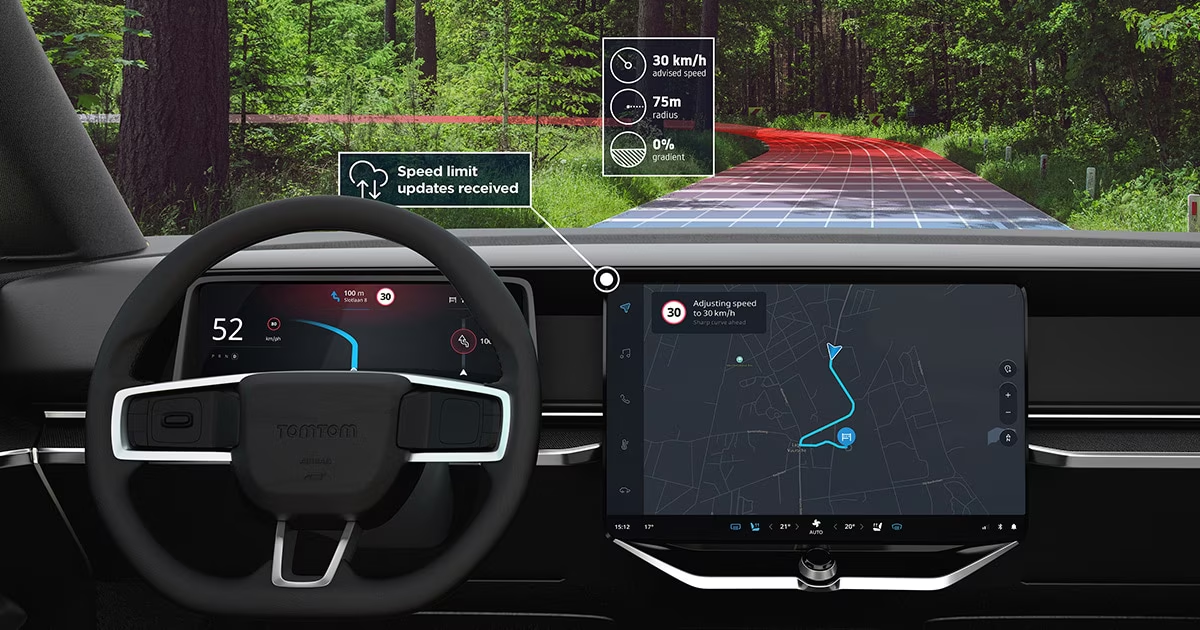
Intelligent Speed Assistance (ISA) is a next-generation vehicle safety system that helps drivers stay within posted speed limits by using a mix of real-time data, automated control, and advanced driver alerts. It’s part of the larger family of Advanced Driver Assistance Systems (ADAS), which includes technologies like lane keeping, adaptive cruise control, and collision avoidance.
While speed limiters are often fixed or manually programmed, ISA is dynamic, meaning it constantly adjusts based on the road you’re driving on — and the speed laws that apply there at that moment.
How ISA Works: A Layered System of Data & Automation
ISA doesn’t rely on a single technology. Instead, it uses multiple input sources and sensor fusion to create a full understanding of what the current speed limit is — and how the vehicle should respond.
Core components of ISA:
-
GPS (Global Positioning System):
-
ISA uses high-precision satellite data to determine the exact location of the vehicle.
-
Based on geolocation, it cross-references the vehicle’s position with a digital speed map database, which contains speed limit information for roads, zones, and regions.
-
-
Front-Facing Camera (Machine Vision):
-
ISA systems often have a camera mounted behind the windshield, pointed at the road ahead.
-
This camera uses image recognition (a form of AI) to read and identify speed limit signs in real-time.
-
It also detects temporary signs — like construction zone speed changes — that may not be in the GPS database.
-
-
Vehicle Control Unit (VCU):
-
After determining the applicable speed limit, the ISA system can either warn the driver or take active control of the vehicle’s throttle.
-
The degree of intervention depends on the type of ISA installed (explained below).
-
-
Driver Feedback Interface:
-
ISA informs the driver through audible alerts (beeps or tones), visual signals (dash indicators or HUD notifications), or haptic feedback (steering wheel vibrations).
-
This keeps the driver aware of their speed without being overly intrusive.
-
Two Types of ISA: Advisory vs Mandatory
ISA systems come in two main versions, and understanding the difference is key to evaluating how they impact driving behavior.
1. Advisory ISA (Information-Only)
This version provides alerts or warnings when the driver is exceeding the speed limit. It’s a non-intrusive system that leaves the final control with the human behind the wheel.
-
Example alert: “Speed limit 45 mph — you are driving 52 mph.”
-
No braking or throttle cut is applied.
-
Found in many cars as part of ADAS Level 1 or 2 packages.
-
Benefits: Enhances driver awareness, flexible, less resistance from drivers.
2. Mandatory ISA (Active Intervention)
This version not only alerts the driver — it can limit engine power, apply slight braking, or adjust cruise control to ensure the vehicle does not exceed the limit.
-
The system may override the accelerator input.
-
Some designs allow temporary override if the driver presses hard (useful for emergency overtaking).
-
Found in new European vehicles under UN Regulation 157.
-
Aligns with ADAS Level 2 automation.
ISA in Europe vs the United States
EU In the European Union
ISA is mandatory for all new cars, vans, trucks, and buses sold from July 2022 onward, as part of the EU’s Vehicle General Safety Regulation (GSR). The goal is to reduce speed-related accidents and support the Vision Zero strategy (zero traffic deaths by 2050).
-
Car brands like Ford, Mercedes, Volvo, and Audi already integrate ISA by default in Europe.
-
The EU version includes speed limit recognition, camera-based updates, and override features.
US In the United States
ISA is not yet mandated, and adoption remains voluntary. Reasons for slower uptake include:
-
Lack of a national digital speed limit database
-
Inconsistent road signage across states
-
Privacy and driver autonomy concerns
However, some U.S. cities are testing ISA in fleet vehicles — for example, New York City recently piloted ISA in government fleets to support urban safety goals.
Challenges of ISA Implementation
Despite its benefits, ISA has a few technical and social challenges:
-
Sign Recognition Errors: Bad weather, dirty signs, or poor visibility can confuse the system.
-
Map Mismatches: Outdated or incorrect digital speed maps can lead to wrong speed limits.
-
Driver Frustration: Some drivers dislike being “controlled” by the vehicle, especially in areas where traffic flow exceeds posted limits.
-
Override Limitations: Emergency scenarios (e.g., avoiding a crash) may require faster speeds.
To counter these issues, modern ISA systems include manual override, adaptive limit control, and continuous learning algorithms that improve accuracy over time.
Benefits of ISA: Safety and Beyond
| Benefit | Description |
|---|---|
| Crash Reduction | Prevents speeding-related accidents, especially in urban zones. |
| Fuel Efficiency | Keeps driving within optimal speed ranges, reducing fuel usage and emissions. |
| Insurance Savings | Vehicles with ISA may qualify for lower premiums due to improved risk profiles. |
| Driver Awareness | Trains safer driving habits through real-time feedback. |
| Pedestrian Protection | Helps enforce limits in school zones and residential areas. |
Speed Limiter vs ISA: Key Differences
| Feature | Speed Limiter | Intelligent Speed Assistance (ISA) |
|---|---|---|
| How it works | Sets a fixed speed limit | Detects speed signs & maps to adjust speed |
| Control level | Direct engine control, fixed cap | Feedback or automatic control based on environment |
| Technology base | Simple electronics or GPS | GPS, camera, AI, ADAS |
| Cost | Lower setup & maintenance | Higher, complex system |
| Where used | Buses, fleets, heavy vehicles | New passenger cars, Europe, some fleets |
| Legal status (US) | Common in fleets, no federal mandate | Not required, optional in advanced vehicles |
ISA is smarter, but speed limiters are proven, reliable, and affordable, especially for heavy-duty and commercial use.
Best Use Cases in the U.S.
As the U.S. faces increasing pressure to reduce road fatalities, manage traffic better, and cut fleet emissions, speed control technologies like speed limiters and Intelligent Speed Assistance (ISA) are gaining attention. But they’re not one-size-fits-all solutions.
Let’s take a closer look at how each technology fits into real-world American road scenarios, especially for fleet operators, schools, and local governments.
1. Fleet Management (Trucking, Logistics, and Delivery Services)
Commercial fleet operations are the heart of America’s transportation economy. From long-haul trucks on interstates to last-mile delivery vans in dense cities, fleet safety and efficiency have a direct impact on costs, reputation, and compliance.
Why Speed Limiters Work Best Here:
-
Speeding tickets cost money. For fleets with dozens or hundreds of vehicles, even one speeding violation can result in DOT inspections, CSA score penalties, or insurance hikes.
-
Fuel costs add up. Driving at consistent, controlled speeds reduces fuel consumption by up to 20%, especially for Class 8 trucks. Every mile per hour over 60 mph reduces fuel economy by about 1%.
-
Insurance and liability protection. Many insurers offer lower premiums for fleets that use speed-limiting technology, especially when integrated with driver behavior monitoring and telematics systems.
-
Dual-speed limiters from companies like Resolute Dynamics allow vehicles to automatically switch speed limits based on GPS-defined zones, such as:
-
70 mph for highways
-
30 mph in downtown areas
-
15 mph in warehouse yards
-
ISA vs Speed Limiter for Fleets:
While ISA offers adaptive control, it’s often too complex and expensive to implement across a fleet. Many commercial vehicles lack the camera systems needed for ISA, making speed limiters the go-to solution for immediate ROI and compliance.
2. School Buses (K-12 Transportation Safety)
There is no room for error when transporting children. School buses operate in some of the most sensitive traffic zones, often surrounded by pedestrians, cyclists, and young kids crossing roads.
Why Speed Limiters Are Essential:
-
Strict speed laws apply near schools, during pickup/drop-off hours, and in residential areas. A speed limiter ensures compliance even when a driver is distracted or under time pressure.
-
Many U.S. states, including California, Texas, and New York, require school buses to follow special rules like:
-
Mandatory 25 mph zones
-
Speed restrictions during school hours
-
No overtaking while loading/unloading
-
-
ISA isn’t ideal here because:
-
It depends on accurate sign detection — which may fail in bad weather or if signs are blocked.
-
It increases cost per unit due to camera and sensor requirements, which is hard to justify for public school budgets.
-
Added Benefits of Speed Limiters for Schools:
-
Parent peace of mind — knowing buses can’t speed.
-
Driver discipline — some newer limiters include data logging, so school districts can review speeding attempts.
-
Lower accident rates — studies have shown that even a 5-mph reduction in speed near schools can drastically reduce injury severity in accidents.
3. City and State Agencies (Municipal Fleets and Government-Owned Vehicles)
Cities and states manage a wide range of vehicle types:
-
Road maintenance trucks
-
Public works vans
-
Utility vehicles
-
Transit shuttles
-
Law enforcement support units
Why They Choose Speed Limiters:
-
Simplicity and cost control — Unlike ISA, which requires ongoing data connectivity and regular updates, speed limiters are low-maintenance and reliable.
-
Policy enforcement — Municipal fleet managers can enforce speed control policies without needing to rely on driver training alone.
-
Vision Zero support — Speed limiters help agencies meet local goals to reduce traffic deaths, especially in urban areas.
For example, cities like Portland, Seattle, and Washington, D.C., which are part of the Vision Zero network, have begun using speed-limited utility fleets to prevent unnecessary speeding in congested neighborhoods.
Where ISA Might Be Used:
ISA is starting to appear in city-owned electric vehicle (EV) fleets and public transit pilots, such as in:
-
New York City — where certain city vehicles were retrofitted with ISA for a 6-month pilot to track speed compliance.
-
San Francisco — evaluating ISA in shared mobility programs like public e-shuttles.
But across the board, traditional speed limiters remain the dominant tool due to their affordability, reliability, and ease of integration into legacy vehicles.
Other Use Cases Worth Mentioning
Rental Car Fleets
Rental companies often face issues with reckless driving, especially with younger or out-of-town renters. Adding a speed limiter or ISA system:
-
Reduces wear and tear
-
Helps avoid legal issues in areas with strict speed enforcement
-
Adds a safety benefit without needing constant driver supervision
Industrial and Construction Zones
In off-road or limited-access areas like:
-
Construction zones
-
Airports
-
Warehouses
Speed limiters ensure compliance with occupational safety standards like those set by OSHA or local safety codes.
Conclusion: One Technology Doesn’t Fit All
The U.S. transportation system is complex, diverse, and constantly evolving. Whether you’re a fleet manager, school district director, or city transportation official, the right speed control solution depends on your:
-
Budget
-
Vehicle type
-
Road environment
-
Risk profile
-
Regulatory exposure
Speed limiters are the proven, scalable, and cost-effective choice for most commercial and government applications.
ISA is innovative and promising — but for now, it remains best suited to new private vehicles and pilot programs where infrastructure and tech can support it.
By matching the right technology to the right use case, we can build safer, smarter roads — one vehicle at a time.
Why Speed Limiters Make Sense for the U.S. (Right Now)
The U.S. isn’t ready to go all-in on ISA just yet. Unlike Europe, there’s no nationwide digital speed map infrastructure. Many roads don’t even have consistent speed limit signs.
Meanwhile, speed limiters are:
-
Easy to install
-
Affordable
-
Compliant with most state and fleet policies
-
Supported by GPS and terrain mapping for dynamic control
Fleet owners and school systems don’t need fancy tech — they need solutions that work today.
Will ISA Be the Future of U.S. Road Safety?
Maybe. Big automakers like Ford and Tesla already include ADAS features that could support ISA. The National Highway Traffic Safety Administration (NHTSA) is also studying ISA’s potential.
But for now, the technology faces hurdles:
-
Inconsistent road signs
-
No federal requirement
-
High cost for retrofitting existing vehicles
ISA might become the norm someday, especially as vehicles get smarter. But until then, traditional speed limiters still lead the way for safer roads.
FAQs
Q: Can I install a speed limiter in my car or truck?
Yes, especially if it’s a fleet or commercial vehicle. Several providers offer aftermarket solutions with GPS integration.
Q: Is ISA required in the U.S.?
No. Unlike Europe, the U.S. does not yet require ISA in new vehicles.
Q: Which is safer — ISA or a speed limiter?
Both improve safety, but for now, speed limiters offer more predictable results, especially for heavy vehicles and buses.
Q: Do speed limiters reduce fuel costs?
Yes. By limiting high-speed driving, they help reduce fuel burn and engine wear.
Final Thoughts
Both Speed Limiters and ISA have their place in modern traffic safety. ISA is exciting, smart, and futuristic. But right now, speed limiters offer the most practical and effective solution for U.S. roads — especially for fleets, school buses, and government vehicles.
With advanced features like dual-speed modes, GPS tracking, and precision controls, speed limiters are more than just a speed cap — they’re a reliable way to save lives, money, and fuel.
If you’re managing a fleet or overseeing transportation safety, investing in speed limiting technology isn’t just smart — it’s essential.