
Starting in 2025, a major shift is coming to commercial transportation in the U.S. The Federal Motor Carrier Safety Administration (FMCSA) is moving forward with a new rule that will require certain commercial vehicles to be equipped with speed limiters. This isn’t just another regulation—it’s something that could affect how your fleet operates every single day.
Let’s break it down, step by step, so you know what to expect, how to stay compliant, and how to prepare your fleet for the road ahead.
What Is the FMCSA Speed Limiter Mandate?
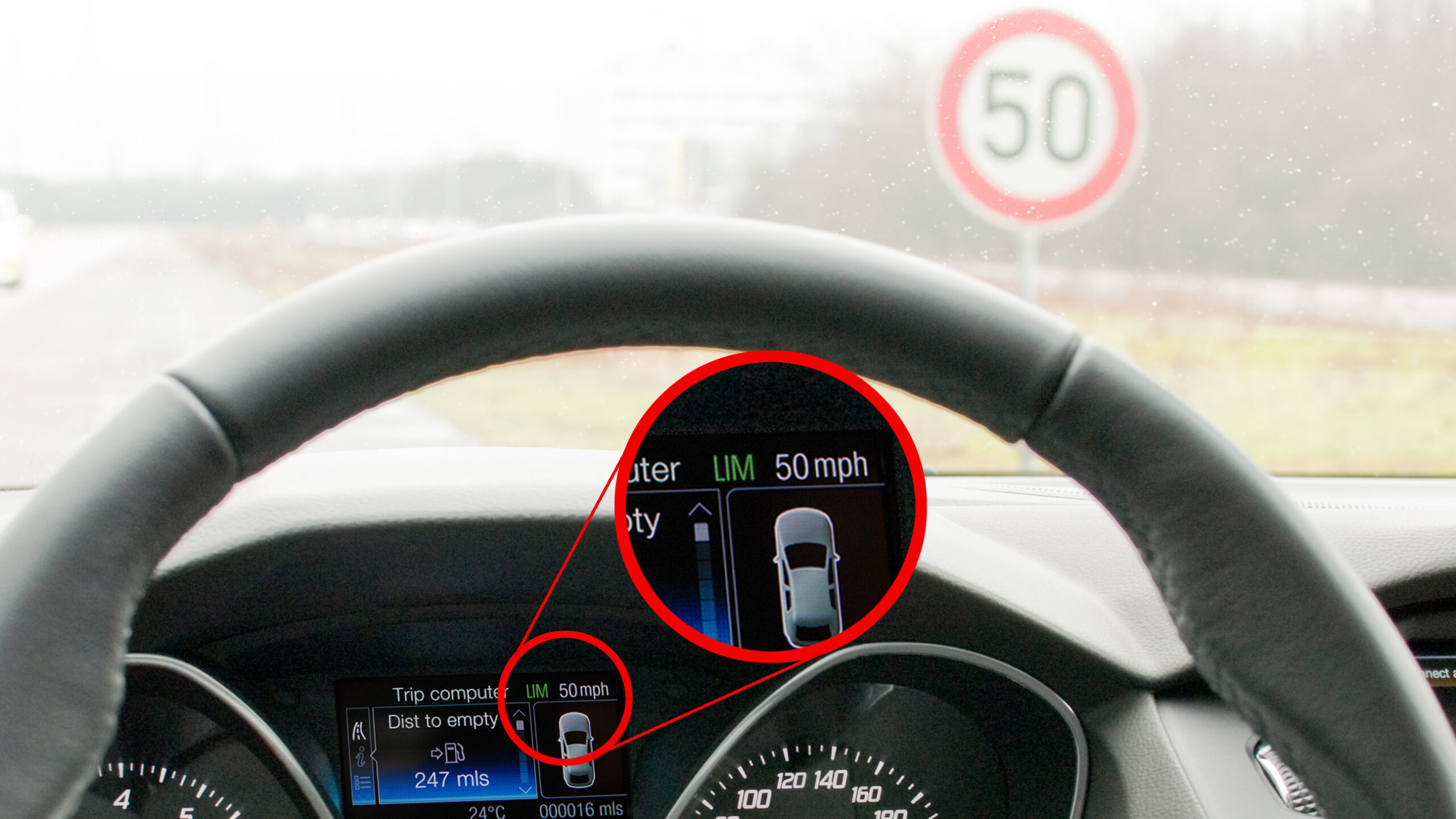
The FMCSA Speed Limiter Mandate is a proposed federal rule by the Federal Motor Carrier Safety Administration (FMCSA) that would require certain large commercial vehicles in the United States to be equipped with a speed-limiting device. These devices—commonly known as speed limiters or speed governors—electronically restrict a vehicle’s top speed, regardless of how much the driver presses the accelerator.
The goal behind the mandate is simple but serious: reduce fatal crashes, improve highway safety, and decrease fuel consumption and emissions. By capping the maximum speed of heavy vehicles, the FMCSA aims to minimize the impact of high-speed collisions, which often lead to more severe damage and injuries compared to accidents at lower speeds.
Background and Origins of the Mandate
This isn’t a brand-new initiative. The concept of mandating speed limiter device in USA has been in discussion for more than a decade. In 2016, the FMCSA and the National Highway Traffic Safety Administration (NHTSA) jointly issued a Notice of Proposed Rulemaking (NPRM) on this topic. However, it stalled due to lack of finalization and shifting political priorities.
Fast-forward to May 2022, and the FMCSA revived the discussion with a new supplemental advance notice of proposed rulemaking (SANPRM), reigniting the effort. The latest push reflects increasing public concern around large truck-involved fatalities, which, according to FMCSA data, have risen sharply in recent years.
The renewed version of the rule is now focused more narrowly on trucks that already have electronic engine control units (ECUs) capable of being programmed to limit speed.
Which Vehicles Are Affected?
The rule applies to commercial motor vehicles (CMVs) that:
-
Are used in interstate commerce
-
Have a gross vehicle weight rating (GVWR) or gross vehicle weight (GVW) of 26,001 pounds or more
-
Are already equipped with an ECU capable of controlling speed
This typically includes Class 7 and Class 8 vehicles, such as:
-
Long-haul freight trucks
-
Commercial buses and motorcoaches
-
Construction and industrial transport vehicles
-
School buses operating across state lines
-
Utility and service vehicles in logistics or oilfield sectors
Small delivery trucks, local box trucks, and intrastate vehicles under the weight limit would likely be exempt.
What Is the Proposed Speed Limit?
One of the most debated parts of the rule is the actual maximum speed to be set. While the FMCSA hasn’t finalized the limit, 65 miles per hour (mph) is currently under consideration. In earlier versions of the rule, other limits like 60 mph and 68 mph were also discussed, and some safety advocacy groups push for even lower limits.
It’s important to note:
-
This speed will be programmed directly into the ECU or the speed limiter hardware/software.
-
The limit would apply at all times—drivers cannot override it, even when merging, overtaking, or descending hills.
-
Trucks with existing speed limiters may still need reprogramming to meet the federal mandate.
Global Context: This Is Not New Internationally
Many other countries already require speed limiters on commercial vehicles:
-
In the European Union, large trucks are limited to 90 km/h (about 56 mph).
-
Australia, Japan, and India have similar rules for both cargo and passenger commercial vehicles.
-
These mandates have been tied to measurable drops in high-speed crashes and improved fuel efficiency across fleets.
The U.S., until now, has left the decision up to individual carriers, which has led to wide variation in safety practices.
Why It Matters for U.S. Fleets
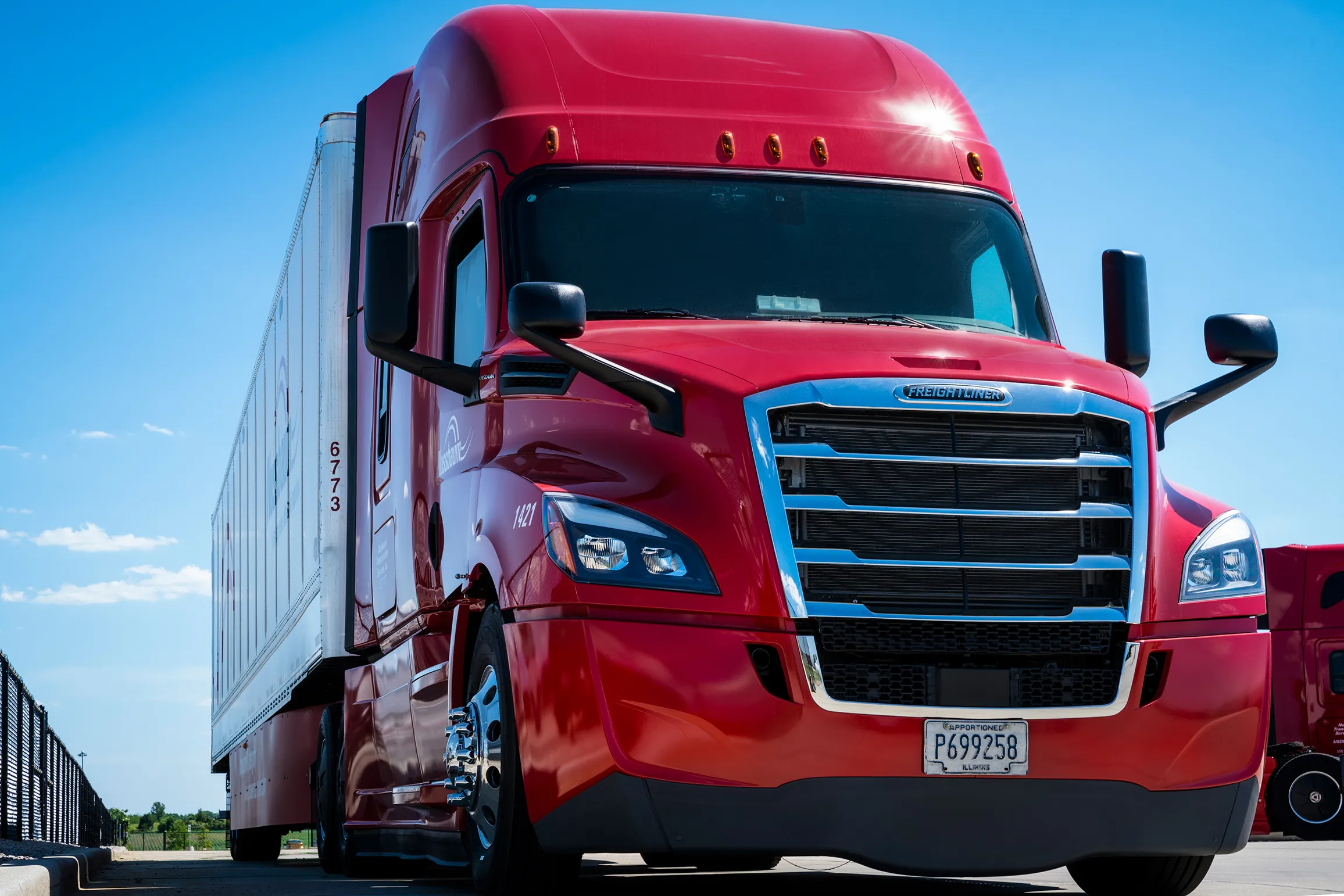
The FMCSA’s plan represents a nationwide shift in how fleets are regulated. For carriers that haven’t already adopted speed limiters, this means changes to:
-
Vehicle procurement (ensuring new vehicles are compliant)
-
Driver training programs
-
Fleet management systems, especially for mixed-use routes and terrains
Moreover, companies with international operations may already have experience managing speed-governed vehicles in other countries. But for domestic-only U.S. fleets, the rule may feel like a big change—one that comes with both logistical and operational implications.
What’s Next?
As of now, the FMCSA is:
-
Reviewing thousands of public comments submitted during the open comment period
-
Finalizing technical specs for what compliance will require
-
Coordinating with equipment manufacturers to ensure availability of approved systems
The final rule is expected to be published sometime in 2025, with a grace period likely before enforcement begins. However, early preparation is key, especially for larger fleets that need time for installation, calibration, and training.
Which Vehicles Are Affected by the Mandate?
The FMCSA Speed Limiter Mandate is expected to apply to a large portion of heavy commercial vehicles in the United States—especially those that travel between states. But the exact types of vehicles affected depend on a few key factors. Let’s break it down.
The Weight Threshold: 26,001 Pounds or More
If your vehicle has a Gross Vehicle Weight Rating (GVWR) or actual gross weight of 26,001 pounds (11,793 kg) or more, it falls under the mandate—no exceptions. This includes Class 7 and Class 8 commercial vehicles, which are the heaviest in the trucking world.
Common examples of Class 7 and 8 vehicles:
-
Class 7 (26,001–33,000 lbs):
-
City transit buses
-
Large delivery trucks
-
Furniture box trucks
-
-
Class 8 (33,001+ lbs):
-
18-wheelers (tractor-trailers)
-
Cement mixers
-
Dump trucks
-
Heavy-duty tow trucks
-
Long-haul freight trucks
-
If your fleet includes vehicles in these classes, the mandate likely applies to you directly.
Used in Interstate Commerce
This is another critical requirement. The mandate only affects vehicles that are used in interstate commerce, which means:
-
Your vehicles cross state lines during business operations
-
You transport goods or passengers between states
-
Your operations are part of a larger interstate supply chain (even if you don’t cross state lines directly)
If your trucks operate only within one state (intrastate) and never leave its borders, the rule may not apply right away. However, future federal updates or state-level adoption could change that.
Important note: Even if a vehicle stays local, if your company operates across states as a business entity, it may still be seen as part of interstate commerce in the eyes of regulators.
Commercial Passenger Vehicles Are Included Too
It’s not just about cargo trucks. The FMCSA mandate also applies to passenger-carrying commercial vehicles that meet the weight and interstate commerce criteria.
That includes:
-
Charter buses and motorcoaches
-
School buses used by multi-state or private operators
-
Shuttle buses for airports, hotels, or events
-
Tour buses that cross state lines
If your business transports people, not just products, and your vehicles are large enough, you’ll also need to comply with the speed limiter rule.
Specialty and Industrial Vehicles May Also Be Affected
Many companies operate non-standard commercial vehicles that still meet the GVWR threshold and participate in interstate commerce. These vehicles are often overlooked—but they’re still included.
Examples:
-
Utility trucks for power and telecom services
-
Mobile cranes and equipment haulers
-
Oilfield service trucks
-
Livestock transporters
-
Concrete pump trucks
If these vehicles travel across state lines—even for service or delivery work—they’ll be required to have speed-limiting devices installed and active.
Already Have a Speed Limiter? You Might Still Need an Upgrade
Some fleets already use speed limiters voluntarily, either for fuel efficiency, safety policies, or insurance discounts. But here’s the catch: not all limiters meet FMCSA requirements.
Under the new mandate, speed limiters must:
-
Be set to a federally approved maximum speed (likely 65 mph)
-
Be non-adjustable by the driver
-
Be certified or verifiable as compliant
-
Work through the vehicle’s ECU (Electronic Control Unit)
If your current limiter can be turned off or overridden—or if it’s not properly documented—you’ll still need to update or replace it.
What About Retrofitting Older Vehicles?
If your heavy-duty vehicle is already equipped with an ECU capable of speed control, it must be programmed to limit speed under the new rule. This applies to most commercial vehicles built after 2003–2008, when digital ECUs became common.
For older vehicles without compatible systems:
-
You may need a hardware retrofit
-
Or you might consider phasing them out, especially if other safety upgrades are also lacking
Exemptions and Grey Areas
At this time, certain vehicle types and use cases might be exempt or treated differently, such as:
-
Emergency response vehicles (fire trucks, ambulances)
-
Military or defense vehicles
-
Agricultural machinery used off-road
-
Intrastate-only vehicles (unless federal rule expands)
However, don’t assume exemption—always confirm with FMCSA or your compliance officer.
Why Even Intrastate Fleets Should Pay Attention
Just because your fleet operates in a single state doesn’t mean you’re in the clear long-term.
Here’s why:
-
The rule could expand to cover intrastate carriers later
-
States may adopt similar rules on their own
-
Growth plans might eventually include interstate business
-
Insurers and shippers may start demanding speed limiter compliance even without a legal requirement
Getting ahead of the rule—rather than waiting for enforcement—is a smart move if you want to future-proof your operations.
Compliance Checklist: What Every Fleet Needs to Prepare
Getting ahead of this rule isn’t just about installing new hardware. It’s about building a full compliance strategy that involves people, processes, and technology.
Here’s what that looks like:
Vehicle Assessment
-
Identify which trucks fall under the GVWR requirement
-
Check current ECU configurations for existing speed limiting features
Speed Limiter Installation
-
Choose a certified speed governor or dual-speed limiter
-
Decide between terrain-based or fixed-speed configurations based on use case
-
Ensure compatibility with your existing telematics or GPS tracking systems
Driver Education
-
Train drivers on how the system works
-
Clarify that manual override is not allowed under FMCSA rules
-
Reinforce safety benefits, not just compliance
Documentation & Inspection
-
Maintain proof of installation and configuration settings
-
Prepare for random compliance audits
-
Keep logs of speed events and limiter activations
How Speed Limiters Work: Technology Behind the Mandate
When most people hear the term speed limiter, they picture a simple device that prevents a truck from going over a certain speed. But today’s systems are far more advanced. These are not just mechanical blocks—they’re intelligent electronic systems integrated with the vehicle’s brain: the Electronic Control Unit (ECU).
Let’s explore how these modern speed limiters actually work, what technologies they use, and why they’re at the center of the FMCSA’s new safety push.
What Is a Speed Limiter, Technically?
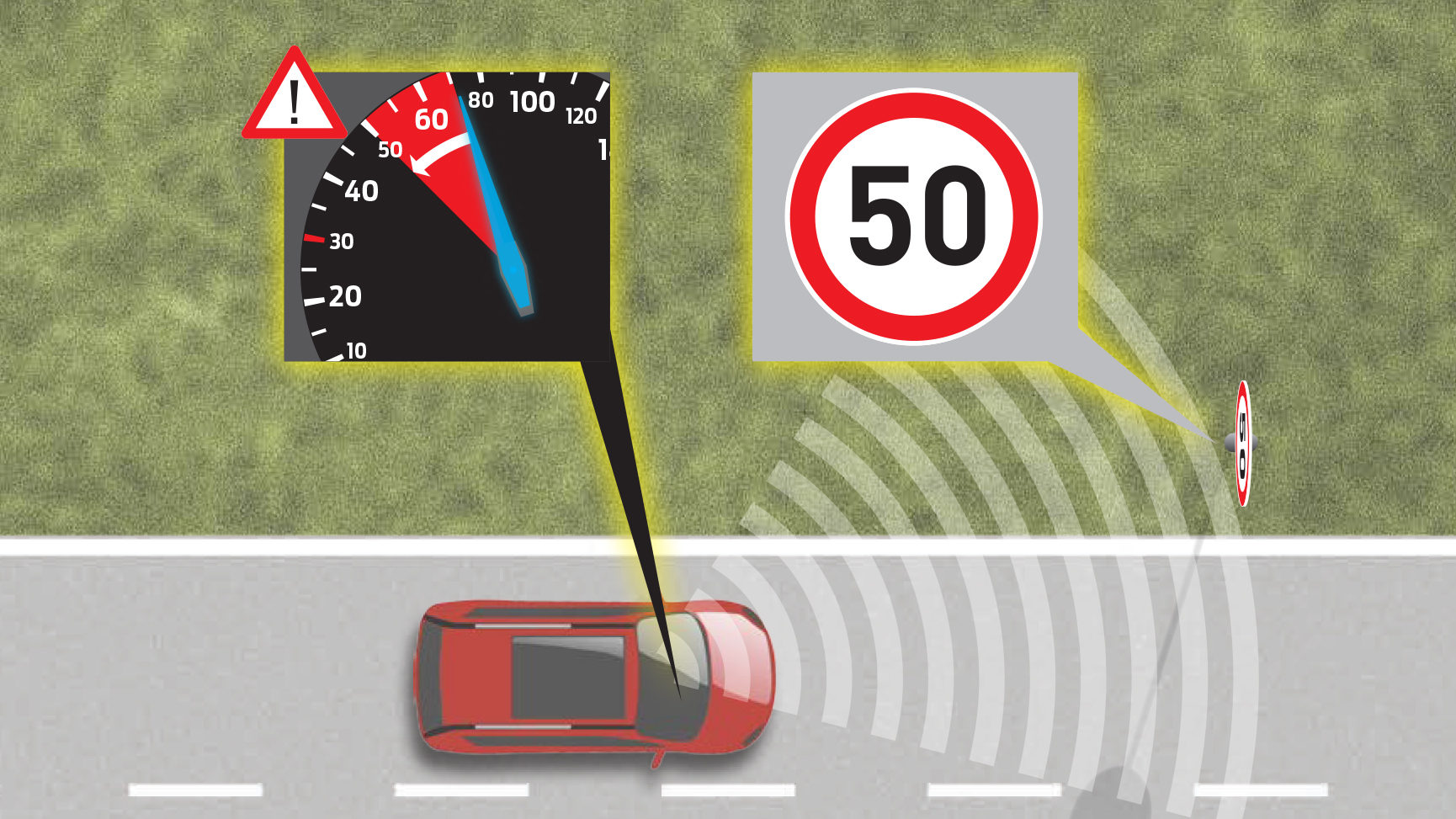
A speed limiter—also known as a speed governor—is a device or software system that prevents a vehicle from exceeding a pre-set speed. In commercial fleets, these systems are often installed to:
-
Comply with regulations
-
Protect drivers and assets
-
Improve fuel efficiency
-
Reduce accident risk
In today’s trucks and buses, speed limiters are rarely external bolt-ons. Instead, they’re electronic control functions programmed into the engine’s ECU—the digital “brain” that controls everything from fuel injection to gear shifts.
Integration with the ECU (Electronic Control Unit)
The ECU continuously monitors several inputs:
-
Throttle position
-
Vehicle speed
-
Engine RPM
-
Brake status
-
Gear selection
The speed limiter function taps into this system and compares real-time speed data against the programmed speed threshold (for example, 65 mph). If the vehicle reaches that limit, the ECU will:
-
Cut engine power incrementally
-
Limit throttle response
-
Prevent downshifting that could increase speed
Importantly, this doesn’t mean slamming on the brakes. A good limiter allows the vehicle to maintain a safe and smooth ride, just without going over the limit.
Types of Speed Limiters Used in Commercial Fleets
There’s no one-size-fits-all device. The type of limiter you need depends on your fleet’s operations, terrain, and routes. Here are the most common types:
1. Fixed Speed Limiters
These are the simplest form of electronic speed control. A fixed speed limiter is set to one constant value, like 65 mph, and cannot be changed by the driver.
-
Use Case: Ideal for long-haul trucks that stay on highways.
-
Benefits: Simple, cost-effective, tamper-proof.
-
Limitations: Not adaptable to varied environments (e.g., city driving).
2. Dual Speed Limiters / Multi-Speed Limiters
These systems offer two or more speed settings based on the vehicle’s environment or purpose. For instance:
-
Urban mode: Limited to 30–35 mph for city or school zones
-
Highway mode: Limited to 65 mph for interstates
Switching can happen automatically via GPS triggers or manually via dashboard controls (only if allowed by regulation).
-
Use Case: Fleets that operate in both cities and highways, like delivery services or school buses.
-
Benefits: More control, more safety in varied terrains.
-
Limitations: Slightly more complex to set up and maintain.
3. GPS-Integrated Smart Speed Limiters
This is where things get really advanced. Some modern speed limiter systems—like those from Resolute Dynamics—are integrated with real-time GPS tracking and mapping software. This allows the limiter to adapt based on:
-
Geolocation
-
Terrain type (hills, mountains, plains)
-
Local speed limits
-
Restricted zones (e.g., school or work zones)
This is known as geo-fencing or terrain-aware limiting.
-
Use Case: Fleets that drive across multiple terrains, cities, or states.
-
Benefits: Adaptive, intelligent, excellent for FMCSA and local law compliance.
-
Limitations: Requires GPS service, data connection, and occasional software updates.
Tamper-Proof Systems for Compliance
One of FMCSA’s concerns is preventing driver override. Older systems could be bypassed by:
-
Reprogramming the ECU
-
Using non-compliant software
-
Disconnecting GPS or limiter units
That’s why modern systems come with:
-
Tamper-proof locking mechanisms
-
Digital audit logs
-
Cloud-based monitoring
-
Alerts if speed limiter is disabled or modified
Resolute Dynamics, for example, offers ECU-integrated systems that send alerts directly to fleet managers if tampering is detected.
Data Logging and Fleet Integration
Modern speed limiters don’t operate in a vacuum. Many are integrated into fleet management platforms where they:
-
Log driving behavior
-
Track overspeed events
-
Sync with telematics systems
-
Send real-time alerts for compliance issues
This data is not just useful for compliance—it’s essential for driver coaching, insurance claims, and fleet performance optimization.
What Happens in Emergencies?
One concern among drivers is what happens if they need to accelerate quickly, say, to avoid a collision or merge safely.
Here’s the truth:
Speed limiters are not emergency override systems. They cap speed but do not interfere with:
-
Steering
-
Braking
-
Emergency lane changes
Drivers must be trained to anticipate and adjust, especially when merging onto fast-moving highways.
In the future, some systems may include “intelligent override” functions in extreme cases, but for now, FMCSA is focused on fixed maximum speed—no override.
Advantages of Early Adoption
The earlier you prepare, the more benefits you unlock beyond just ticking the compliance box.
1. Risk Reduction
Speed limiters reduce the chance of high-speed collisions, protecting drivers, cargo, and your reputation.
2. Insurance Savings
Many insurers offer lower premiums to fleets using speed governors and other safety tech.
3. Fuel Efficiency
Speed limiting at 65 mph can improve fuel economy by 5-10%, which adds up fast in long-haul operations.
4. Competitive Edge
Being a compliant, safety-first carrier makes you more attractive to shippers and partners.
How Resolute Dynamics Can Help
At Resolute Dynamics, we specialize in precision-engineered speed limiter technology built for the realities of U.S. roads. Our products are already trusted by fleets across the globe and include:
Vehicle Speed Limiter / Speed Governor
A reliable, stand-alone device to cap max speed in line with FMCSA guidelines.
Dual Speed Limiter (Multi-Speed)
Adaptable for mixed-terrain operations, letting you control two speeds depending on where your vehicle is.
Integrated GPS Tracking Systems
Track speed, location, fuel use, and driver behavior—all in one dashboard.
School Bus Safety Solutions

Compliant, tamper-proof limiters specifically made for school fleets.
All our solutions are backed by quality certifications and customizable to your fleet’s needs.
Frequently Asked Questions
Can drivers turn the limiter off?
No. FMCSA rules will not allow drivers to bypass or disable the limiter.
When does it take effect?
Final dates are still under review, but compliance will likely be enforced by mid-to-late 2025.
Do older vehicles need retrofitting?
Yes, if they meet the weight and usage requirements and don’t already have a compliant limiter.
What speed will be enforced?
Current proposals suggest 65 mph, but that may change. Stay updated with FMCSA announcements.
Final Thoughts: Act Now for 2025 Compliance
Change is coming—and it’s closer than it seems. The FMCSA Speed Limiter Mandate will shape how commercial fleets operate across the U.S. Preparing early will save time, money, and headaches down the road.
Whether you manage a dozen trucks or a thousand, getting your fleet ready is about more than hardware—it’s about building a culture of safety and responsibility.
Resolute Dynamics is here to support you with the tools, technology, and guidance you need to stay ahead. Let’s make your fleet safer, smarter, and fully ready for what 2025 brings.